Stained Glass Window Restoration: A Master’s Guide to Preserving Heritage and Light
What if the fractured light filtering through your sanctuary isn't merely a sign of age, but a quiet call for stewardship? It's natural to feel a deep sense of anxiety when a cherished piece begins to sag or crack, fearing that any intervention might erase the very history you seek to protect. Choosing the path of stained glass window restoration is more than a technical necessity; it's a sacred commitment to preserving a lineage of light that has watched over generations.
You likely believe that these windows are the heartbeat of your space, holding stories that deserve to be told for another century. In this guide, you'll discover how the meticulous art of conservation breathes new life into tired lead and weathered glass without losing the subtle colours or original detail. We'll explore the vital differences between a simple repair and a full master restoration, giving you the clarity needed to choose an artisan who respects the spiritual and historical weight of your heritage. You'll gain a clear understanding of the rhythmic steps required to ensure your glass glows with its intended radiance once again.
Key Takeaways
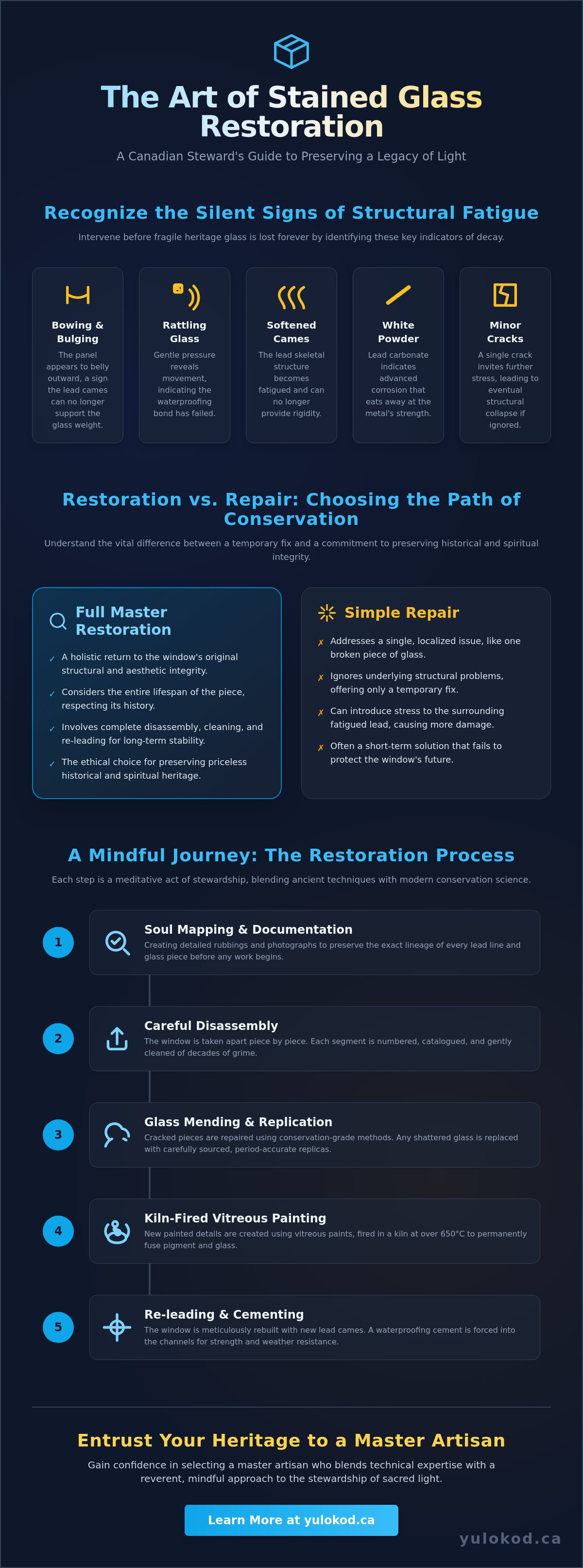
- Recognize the "silent signs" of structural fatigue, such as bowing lead and softened cames, to intervene before fragile heritage glass is lost forever.
- Navigate the ethical choice between simple repair and full conservation by prioritizing the historical and spiritual integrity of your original architectural glass.
- Discover how master-level stained glass window restoration employs ancient kiln-fired techniques to ensure that replaced sections mirror the original artist's hand with permanent, vitreous radiance.
- Learn the meditative process of creating a "soul map" through detailed rubbings and documentation to preserve the exact lineage of every lead line.
- Gain confidence in selecting a master artisan who blends technical expertise with a reverent, mindful approach to the stewardship of sacred light.
Understanding the Impermanence: When Stained Glass Requires Restoration
In the quiet stillness of a sunlit room, we often perceive stained glass as eternal. Yet, like all things of beauty, it exists within a cycle of impermanence. True stained glass window restoration is far more than a mere repair; it's a holistic return to a window’s original structural and aesthetic integrity. While a simple repair might address a single shard, restoration considers the entire lifespan of the piece. It acknowledges that the materials themselves, including the lead, the glass, and the putty, breathe and age over many decades.
One must learn to read the silent signs of decay. You might notice a subtle bowing or bulging in the panel, where the glass appears to belly outward. This isn't just an aesthetic quirk. It's a signal that the lead cames, the skeletal structure of the art, have softened and can no longer support the weight of the glass. Distinguishing between surface grime and the deep oxidation of historical lead work is essential at the centre of our stewardship. Grime sits on the surface, but oxidation changes the very chemistry of the metal, weakening the bond that holds the light in place.
In Canada, our heritage windows face a unique trial. The extreme temperature shifts between our biting winters and humid summers cause constant expansion and contraction. This thermal movement puts immense pressure on the lead and the glass, accelerating the aging process far more quickly than in more temperate regions. The ethical and technical frameworks found in the conservation and restoration of stained glass emphasize that we are but temporary guardians of these treasures. Our role is to ensure their voice remains clear for those who follow.
Identifying Structural Fatigue and Leaded Decay
Lead has a finite lifespan, typically lasting between 75 to 100 years before it becomes brittle or overly fatigued. When the internal waterproofing compound, often called cement, turns to dust, the window loses its rigidity. You can perform a gentle tap test to assess the health of your window. Lightly press against the glass segments; if you hear a rattling sound or feel movement, the structural bond has failed. At this stage, stained glass window restoration becomes necessary to prevent the glass from falling out of the frame.
The Impact of Environmental Stress on Heritage Windows
Moisture often becomes trapped between protective exterior glazing and the original art, creating a microclimate that fosters decay. Look for a fine white powder on the lead cames. This is lead carbonate, a sign of advanced corrosion that eats away at the metal's strength. Ignoring a single minor crack may seem harmless, but it invites further stress that eventually leads to irreversible structural collapse. Addressing these issues early preserves the sacred beauty of the work before the damage becomes too great to mend.
The Master’s Craft: Kiln-Fired Painting and Vitreous Techniques
The soul of a heritage window resides within its painted details. While the lead provides the skeleton, the painted imagery, such as the faces of saints, the delicate veins of a leaf, or the subtle shading of a robe, carries the emotional and spiritual weight of the piece. In the process of stained glass window restoration, we must act as a bridge between the original artist and the future. This requires more than a steady hand; it demands a deep understanding of vitreous techniques that have remained largely unchanged for centuries.
Vitreous paint is a permanent bond created at 1200 degrees Fahrenheit where the pigment becomes one with the glass. These paints are composed of finely ground glass mixed with metallic oxides, such as iron or copper. When we apply these pigments, we aren't simply painting in the modern sense. We are layering light. The process is deeply meditative, often requiring three or four separate kiln firings to achieve the correct depth and translucency. Modern "cold paints" or resins, which sit on the surface and eventually peel or fade, are never acceptable in professional restoration. They lack the spirit and the longevity of the original work.
Replicating the Original Artist’s Intent
Matching the textures and glass densities of the 19th century presents a unique challenge for the modern artisan. We often spend hours sourcing glass that mimics the slight imperfections and seeds found in historical mouth-blown sheets. When a fragment is missing, we trace the surrounding patterns to hand-paint a replacement that ensures a seamless visual flow. If you are seeking to honour the lineage of your sacred windows, you may find inspiration in our dedicated approach to kiln-fired glass painting.
The Role of High-Fire Kilns in Longevity
The kiln is where the transformation becomes final. By adhering to the SGAA Standards and Guidelines, we ensure that every firing schedule is precisely managed. This precision prevents internal stress in the glass that could lead to future breakage. High-fire techniques distinguish a master restorer from a general repair shop, as they guarantee the detail will remain vibrant against UV light for centuries. It's a commitment to permanence that honours both the artist’s vision and the sacredness of the light it filters.
Restoration vs. Repair: Choosing the Path of Conservation
True stewardship begins with a profound question: are we merely fixing a break, or are we preserving a legacy? Choosing between a minor repair and a comprehensive stained glass window restoration is a decision rooted in the reverence we hold for the past. While it's tempting to seek a quick solution for a single cracked pane, we must consider the ethical framework of conservation: "As much as necessary, as little as possible." This philosophy guides us to protect the original fabric of the window while ensuring its structural survival. A simple on-site repair often fails to address the underlying fatigue of the lead cames, merely masking a deeper instability that will eventually return.
When we choose the path of conservation, we're looking at the window as a living entity that deserves a thoughtful, long-term plan. Many well-meaning owners have devalued rare heritage art by allowing non-reversible "quick fixes" that prioritize speed over integrity. Methods such as applying silicone or epoxy directly to historical glass can be catastrophic. These materials bond too aggressively and age differently than the glass, often causing further fractures as they expand and contract in our Canadian climate. As detailed in the National Park Service Preservation Brief, every intervention should ideally be reversible. This allows future guardians to care for the piece without being forced to undo the damage of a previous, poorly executed repair.
Defining the Scope of Heritage Preservation
A full stained glass window restoration involves the complete disassembly of the panel, allowing for a thorough cleaning of each glass shard and the replacement of all lead cames. Conservation, by contrast, focuses on stabilizing original materials to prevent further decay without necessarily replacing every component. We must avoid the "quick fix" trap. Using modern adhesives on leaded windows might stop a rattle today, but it creates a brittle bond that cannot breathe with the glass, eventually leading to structural failure.
Evaluating Historical Significance and Value
Before beginning any work, we must assess the glass for rare manufacturers or signatures from specific historical periods. The presence of mouth-blown glass or specific 19th-century textures significantly impacts the appraisal value of a home or spiritual centre. Consulting with a master who approaches the craft with a sense of sacred awareness ensures that the restoration doesn't just mend a window, but honours the artist's original intent. A professional restoration can restore the full market and historical value of the piece, turning a fragile liability into a glowing asset for generations.
A Mindful Journey: The National Stained Glass Restoration Process
Restoration is a pilgrimage of sorts, a methodical return to a state of grace. It begins with a reverent assessment of the light and the glass in their natural environment. During this initial consultation, the artisan observes how the sun interacts with the textures at different hours, noting where the shadows fall and where the brilliance has dimmed. This isn't a mere technical inspection; it's an invitation to understand the window’s history and the spiritual intent behind its creation. By acknowledging the unique character of the piece before it ever leaves its frame, we ensure the subsequent work remains grounded in respect.
From Documentation to Deconstruction
Before a single piece of lead is cut, we create what we call a "soul map." This involves high-resolution photography and hand-drawn rubbings that capture every nuance of the original lead lines and glass placements. These rubbings serve as the essential blueprint for the entire stained glass window restoration. Once the map is complete, deconstruction begins with extreme patience. We remove the old, fatigued lead without stressing the edges of the antique glass, which can be incredibly brittle after a century of service. The fragments are then cleaned using gentle, chemical-free methods to lift decades of soot, nicotine, and environmental grime, revealing the true, vibrant colour hidden beneath the veil of time.
Reassembly and the Rebirth of Light
Rebuilding the window is an act of quiet meditation. We use heritage-grade lead came that matches the profile and weight of the original 19th-century materials. Each joint is soldered with precision, creating clean, strong connections that still allow the panel the flexibility it needs to breathe within its architectural setting. To provide structural rigidity and weatherproofing, we apply a traditional matrix of linseed oil-based cement. This compound is hand-rubbed into the gaps between the lead and the glass, a labour-intensive process that ensures the window remains watertight and secure for another century.
The final stage is the polish, a transformative moment where the excess cement is cleared away to reveal the renewed brilliance of the glass. It's a moment of rebirth where the original artist’s vision is once again clear and unobstructed. If you feel called to begin this restorative journey for your own heritage pieces, we invite you to explore our dedicated approach to stained glass restoration. This methodical path ensures that every shard is treated with the compassion and technical expertise it deserves.
Entrusting Your Heritage to Yulokod Studios
Yulokod Studios stands as a sanctuary for those who view their glass not merely as a building material, but as a vessel for history and light. At the heart of our practice is the understanding that stained glass window restoration is a delicate act of stewardship. We blend the technical rigour of four decades of experience with a path of sacred awareness, ensuring that every project honours the spiritual and artistic lineages it represents. Our studio is a place where the ancient traditions of kiln-fired glass painting are kept alive with a modern, mindful perspective. We don't just see a window; we see a legacy that deserves to be protected with the utmost integrity.
Ani Jamyang Donma, our lead artisan, brings a rare depth of knowledge to the craft. Having trained at the historic Robert McCausland Ltd. studio, she possesses a mastery of ecclesiastical and historical imagery that is increasingly rare today. Her expertise in kiln-fired glass painting allows us to replicate lost details with a precision that feels like a conversation with the original creator. This commitment to Canada’s artistic history ensures that your heritage windows are not just repaired, but truly restored to their intended glory, maintaining the sacred dance of light that defines your space.
Sacred Awareness Through Beauty
We view the restoration process as a form of healing for both the object and the space it inhabits. When a window is cracked or sagging, the atmosphere of the room often feels diminished. By applying traditional methods and a compassionate approach, we seek to restore the harmony of the environment along with the glass itself. This isn't just about fine art restoration; it's about a deep dedication to a path of service and beauty. We treat every fragment with the same reverence one might give to a sacred text, realizing that we are preserving a vital piece of a larger spiritual tapestry. Our goal is to ensure the window's presence remains a source of peace and higher awareness.
Beginning Your Restoration Project
Taking the first step toward preserving your heritage glass is a significant moment of intentionality. We've designed our process to be as serene and clear as the light we work with. You can begin by requesting a preliminary assessment through our digital portal, where you can share images and details of your piece. We maintain a national commitment to serving all of Canada, providing expert guidance on secure transport and shipping for precious glass art, ensuring that your treasure arrives at our studio safely and returns to you transformed. Every stained glass window restoration we undertake is a journey we walk together, with transparency and respect at every turn.
Invite the light back into your space with Yulokod Studios. We look forward to guiding you through this restorative journey and helping you preserve your sacred heritage for the generations yet to come.
Guiding the Light into a New Century
Preserving a heritage window is more than a structural necessity; it's an act of devotion to the history and beauty that define your space. You've seen how the path of stained glass window restoration transcends simple repair, demanding a master's touch to ensure that every lead line and painted detail remains true to the original artist's intent. By identifying the silent signs of decay early and choosing conservation over temporary fixes, you protect the soul of the glass for another hundred years.
Yulokod Studios, led by master artisan Ani Jamyang Donma, specializes in the intricate art of kiln-fired glass painting and the reverent preservation of sacred imagery. We bring a unique blend of technical expertise and sacred awareness to every project, ensuring your heritage is handled with the compassion it deserves. Begin your journey of restoration with Yulokod Studios today. Let us help you return the original radiance to your sanctuary, ensuring that your windows continue to filter the light with grace. May the beauty you preserve today continue to inspire peace for all who stand within its glow.
Frequently Asked Questions
How much does stained glass window restoration typically cost in Canada?
The investment for restoring a heritage piece depends on the size, the complexity of the painted details, and the physical state of the lead cames. Because every window is a unique piece of history, an artisan must evaluate the level of decay and the rarity of the glass used. A full restoration is a labour-intensive process that involves complete disassembly, which is reflected in the final cost of the project.
Can I restore my own stained glass windows at home?
Restoration requires a specialized studio environment with high-fire kilns and specific safety equipment for handling historical lead. Attempting a DIY restoration often leads to permanent damage, as modern adhesives are not compatible with antique glass. Professional artisans spend years mastering the chemistry of vitreous paints and the physics of leaded structures to ensure the work remains stable for another century.
How long does a full stained glass restoration project usually take?
A comprehensive project often spans several weeks to months, depending on the scale of the work. This deliberate pace allows for the careful documentation of the original lead lines and the multiple kiln firings needed to match historical paint. We honour the rhythmic nature of this craft, ensuring that every shard is cleaned and set with the patience it deserves.
Is it better to repair a single crack or restore the entire window?
If the lead structure is bowing or has reached its 75-year lifespan, a simple repair is often just a temporary mask for deeper instability. Full stained glass window restoration addresses the skeletal health of the entire panel. This holistic approach is the only way to prevent future structural collapse and ensure the window remains watertight and secure.
What is the difference between leaded glass and stained glass restoration?
Leaded glass restoration typically focuses on clear or textured geometric patterns held by lead cames. Stained glass restoration is more intricate, as it involves the preservation of hand-painted imagery and kiln-fired details. Both require a deep understanding of traditional metalwork, but stained glass demands the additional expertise of a master painter to honour the original artist's vision.
Will restoring my window decrease its historical or antique value?
Professional restoration preserves and often enhances the value of a heritage piece by using reversible, traditional methods. When you choose a master who follows ethical conservation standards, you are protecting the window’s provenance. Using improper materials like silicone or epoxy will devalue the art, as these "quick fixes" often cause permanent damage to the glass surface.
How do I safely clean old stained glass without damaging the paint?
The safest way to clean heritage glass is with distilled water and a soft, lint-free cloth. You should avoid any commercial cleaners that contain ammonia, vinegar, or harsh acids, as these chemicals can corrode the lead and lift delicate painted details. If the glass has decades of heavy soot or nicotine, it's best to have a professional assessment to avoid accidental damage.
Can missing or shattered pieces of antique glass be perfectly matched?
Master artisans can achieve a seamless match by sourcing glass that mimics the seeds and textures of 19th-century sheets. Through the process of stained glass window restoration, missing fragments are hand-painted with vitreous pigments and fired in a kiln. This ensures that the new pieces share the same translucency and permanence as the original sections of the window.
Leave a comment